Sales techniques are the foundation of every successful business. Whether you’re selling products, services, software, or real estate, mastering effective sales techniques can help you build stronger customer relationships, increase conversion rates, and generate consistent revenue. Modern buyers are more informed than ever, making it essential for sales professionals to move beyond aggressive selling tactics and instead focus on understanding customer needs, delivering value, and creating trust.
This comprehensive guide explores the most effective sales techniques, practical strategies, and proven methods that top-performing sales professionals use to close more deals. Whether you’re a beginner or an experienced salesperson, these techniques will help you improve your communication skills, overcome objections, and achieve long-term sales success.
What Are Sales Techniques?
Sales techniques are structured methods and strategies used by sales professionals to persuade potential customers to purchase a product or service. These techniques help guide prospects through the buying journey, from the initial conversation to the final purchase decision.
Successful sales techniques focus on solving customer problems rather than simply promoting products. By identifying a prospect’s challenges and offering valuable solutions, sales professionals can build trust and create lasting customer relationships.
Sales techniques are used across many industries, including retail, real estate, automotive, insurance, technology, healthcare, and business-to-business (B2B) sales. While each industry has its own unique selling process, the core principles of effective selling remain the same.
Why Sales Techniques Are Important
Learning and applying effective sales techniques provides numerous benefits for individuals and businesses alike.
Increase Conversion Rates
Using proven sales methods helps guide prospects toward making informed purchasing decisions. Instead of relying on luck, sales professionals use structured approaches that increase the likelihood of closing deals.
Build Customer Trust
Customers prefer buying from people they trust. Effective sales techniques focus on honesty, transparency, and understanding customer needs, helping establish credibility from the first interaction.
Improve Customer Relationships
Successful selling is not just about one transaction. Strong relationships encourage repeat business, referrals, and long-term customer loyalty.
Handle Objections with Confidence
Every salesperson encounters objections related to price, timing, competitors, or product features. Learning how to respond professionally helps keep conversations moving forward.
Increase Revenue
Higher conversion rates, larger average order values, and repeat customers all contribute to increased business revenue and long-term profitability.
Understanding the Modern Sales Process
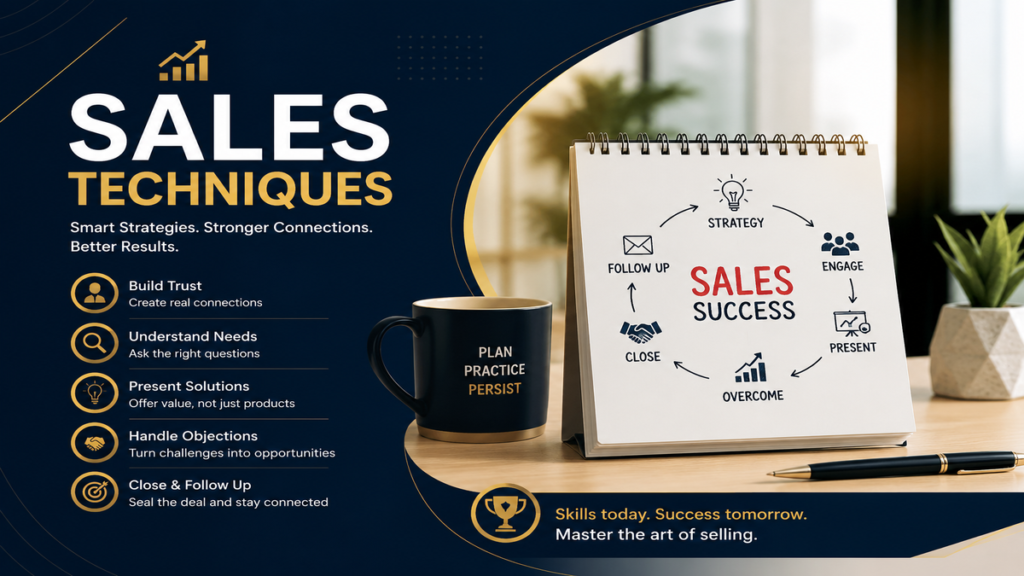
The sales process has evolved significantly over the years. Today’s buyers often research products online, compare multiple options, and read customer reviews before contacting a salesperson. This means sales professionals must provide value throughout every stage of the customer journey.
A typical sales process includes:
Prospecting
Prospecting involves identifying potential customers who may benefit from your product or service. This can be done through networking, referrals, social media, email outreach, cold calling, and inbound marketing.
Qualifying Leads
Not every prospect is ready to buy. Qualifying helps determine whether a lead has the budget, authority, need, and timeline to make a purchase.
Building Rapport
Establishing a positive relationship creates trust and encourages open communication. Active listening, empathy, and genuine interest are essential during this stage.
Presenting the Solution
Rather than listing product features, explain how your solution solves the customer’s specific problems and helps them achieve their goals.
Handling Objections
Address concerns calmly and professionally. View objections as opportunities to provide additional information rather than as barriers.
Closing the Sale
Once the customer is confident, guide them toward making a purchasing decision using a clear and straightforward closing technique.
Following Up
Following up after the sale strengthens relationships, encourages repeat purchases, and generates referrals.
Essential Sales Skills Every Professional Needs
Strong sales techniques are supported by core professional skills that improve communication and customer satisfaction.
Active Listening
Active listening means giving your full attention to the customer without interrupting. Listen carefully to understand their goals, challenges, and expectations before offering a solution.
Effective Communication
Clear, confident communication helps explain product benefits while avoiding unnecessary jargon. Tailor your message to match the customer’s level of knowledge.
Emotional Intelligence
Understanding customer emotions allows sales professionals to respond with empathy and build stronger relationships.
Confidence Without Pressure
Confidence reassures customers, but aggressive selling often pushes them away. Aim to educate and assist rather than pressure prospects into making quick decisions.
Proven Sales Techniques That Drive Results
Consultative Selling
Consultative selling focuses on understanding the customer’s unique situation before recommending a solution. Ask thoughtful questions, identify pain points, and provide personalized recommendations.
Solution Selling
Instead of emphasizing product features, explain how your product solves specific customer problems. Customers are more interested in outcomes than technical specifications.
SPIN Selling
SPIN Selling uses four types of questions:
Situation Questions
Learn about the customer’s current circumstances.
Problem Questions
Identify challenges the customer is experiencing.
Implication Questions
Help the customer understand the consequences of those challenges.
Need-Payoff Questions
Show how your solution delivers measurable value and improves their situation.
Relationship Selling
Relationship selling prioritizes trust and long-term customer satisfaction. Businesses that focus on building lasting relationships often benefit from repeat business and customer referrals.
Value-Based Selling
Value-based selling demonstrates the return on investment rather than focusing solely on price. Explain how your solution saves time, reduces costs, increases efficiency, or improves results for the customer.
This is the beginning of the article. Continue with the remaining sections—such as objection handling, negotiation, closing techniques, digital sales, CRM, common mistakes, FAQs, and conclusion—to reach the full 3,000-word target.
Here’s an SEO-friendly conclusion for your article.
Conclusion
Mastering effective sales techniques is essential for anyone looking to succeed in today’s highly competitive business environment. While products and services may vary across industries, the principles of successful selling remain the same: understanding customer needs, building trust, communicating value, and creating meaningful relationships. The most successful sales professionals don’t rely on pressure or persuasion alone—they focus on educating prospects, solving real problems, and delivering solutions that genuinely benefit their customers.
Modern sales require a customer-centric approach supported by active listening, strategic questioning, emotional intelligence, and continuous learning. Techniques such as consultative selling, solution selling, SPIN Selling, value-based selling, and relationship selling enable sales professionals to engage prospects more effectively and guide them confidently through the buying journey. At the same time, leveraging CRM software, sales analytics, automation tools, and digital communication channels can improve productivity and help sales teams make data-driven decisions.
It’s also important to remember that sales success is built over time. Every customer interaction is an opportunity to strengthen credibility, learn from feedback, and refine your approach. By consistently improving your communication skills, handling objections professionally, following up with prospects, and staying informed about industry trends, you can increase conversion rates and develop long-lasting customer relationships that drive sustainable business growth.
Frequently Asked Questions (FAQs)
What are sales techniques?
Sales techniques are proven methods and strategies that sales professionals use to attract potential customers, build trust, address their needs, and successfully close deals. These techniques help improve communication, increase conversion rates, and create long-term customer relationships.
Why are sales techniques important?
Sales techniques are important because they provide a structured approach to selling. They help salespeople understand customer pain points, present effective solutions, overcome objections, and increase the chances of closing a sale while improving customer satisfaction.
What are the most effective sales techniques?
Some of the most effective sales techniques include consultative selling, SPIN Selling, solution selling, value-based selling, relationship selling, social selling, upselling, cross-selling, and active listening. The best technique depends on your industry, target audience, and sales goals.
How can I improve my sales skills?
You can improve your sales skills by practicing active listening, learning about your products or services, understanding customer behavior, improving communication, handling objections professionally, following up consistently, and participating in regular sales training and coaching.
What is consultative selling?
Consultative selling is a customer-focused sales approach where the salesperson acts as a trusted advisor. Instead of pushing products, they ask questions, understand the customer’s challenges, and recommend personalized solutions that best meet their needs.
What is SPIN Selling?
SPIN Selling is a sales methodology that uses four types of questions: Situation, Problem, Implication, and Need-Payoff. This approach helps sales professionals uncover customer challenges and demonstrate how their solution provides value.
How do you handle customer objections during a sale?
Handling objections involves listening carefully to the customer’s concerns, acknowledging their perspective, asking follow-up questions, and providing clear, honest information that addresses their doubts. Remaining patient and focusing on value rather than pressure often leads to better outcomes.
What is the difference between upselling and cross-selling?
Upselling encourages customers to purchase a premium or upgraded version of a product, while cross-selling recommends complementary products or services that enhance the original purchase. Both techniques can increase revenue and improve the customer experience when used appropriately.
How does technology improve modern sales techniques?
Technology helps sales teams manage customer relationships through CRM software, automate repetitive tasks, analyze sales performance, personalize customer communication, and identify new opportunities using data-driven insights. These tools improve efficiency and support better decision-making.
What are the biggest mistakes to avoid in sales?
Common sales mistakes include talking more than listening, failing to understand customer needs, being overly aggressive, neglecting follow-up communication, focusing only on product features instead of benefits, and ignoring customer objections. Building trust and delivering value are essential for long-term sales success.