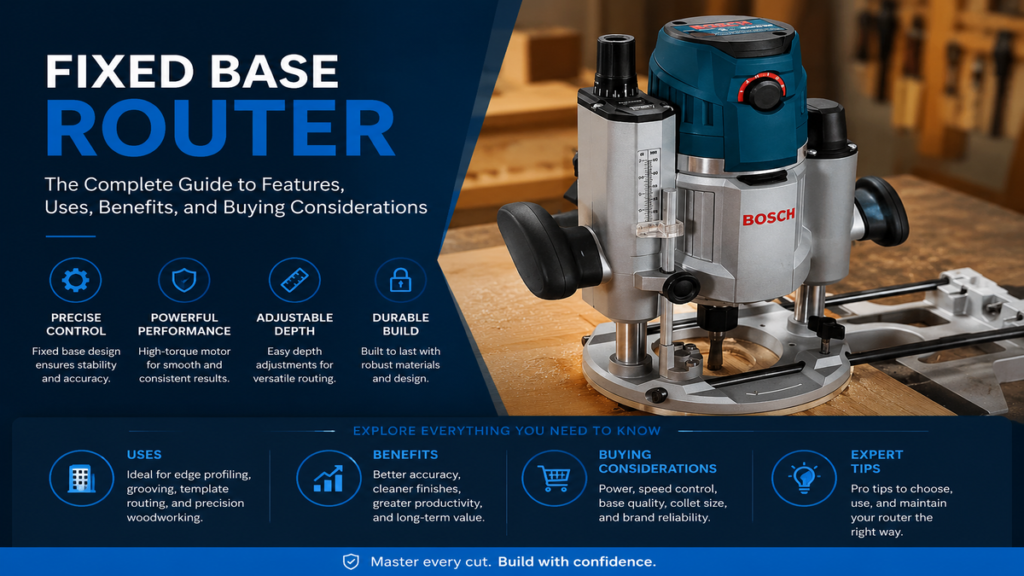
What Is a Fixed Base Router and How Does It Work?
A fixed base router is one of the most essential power tools in woodworking, cabinetry, furniture making, and home improvement projects. Whether you are a professional carpenter, a furniture manufacturer, or a DIY enthusiast, a fixed base router provides the precision, stability, and control needed to create clean cuts, decorative edges, grooves, joints, and intricate woodworking designs.
Unlike plunge routers that allow the cutting bit to move vertically during operation, a fixed base router keeps the cutting depth locked in place. This design offers exceptional accuracy and consistency, making it the preferred choice for edge profiling, trimming, dado cuts, and many other woodworking tasks.
As woodworking technology continues to advance, modern fixed base routers offer improved power, ergonomic designs, variable speed controls, dust collection systems, and compatibility with router tables. Understanding how a fixed base router works and selecting the right model can significantly improve the quality of your woodworking projects.
This comprehensive guide explores everything you need to know about fixed base routers, including their features, applications, advantages, maintenance requirements, safety tips, and factors to consider before purchasing one.
What Is a Fixed Base Router?
A fixed base router is a handheld woodworking power tool designed to hollow out areas of wood, create decorative edges, cut grooves, and perform precision shaping operations.
The defining feature of a fixed base router is that the motor remains locked at a predetermined cutting depth throughout the operation. Once the user sets the cutting depth, the router maintains that position until manually adjusted.
This fixed-depth design provides exceptional control and accuracy, making it ideal for tasks that require consistent cuts.
Main Components of a Fixed Base Router
A fixed base router consists of several important components.
Motor Housing
The motor provides the power required to rotate the cutting bit at high speeds.
Fixed Base
The base supports the router and keeps the cutting depth stable during operation.
Collet
The collet securely holds router bits in place.
Adjustment Ring
Allows users to set and fine-tune cutting depth.
Handles
Provide control and stability during routing operations.
Speed Control System
Many modern routers include variable speed settings to accommodate different materials and bit sizes.
How Does a Fixed Base Router Work?
A fixed base routers operates by spinning a cutting bit at extremely high speeds while the user guides the tool across the workpiece.
The cutting bit removes material from the wood according to the selected depth and profile.
Setting the Depth
Before starting, the operator adjusts the router to the desired cutting depth.
Once locked, the depth remains constant throughout the entire cut.
Cutting Operation
As the router moves across the material, the spinning bit shapes, trims, or removes wood.
Consistent Results
Because the depth remains fixed, users can achieve highly consistent and repeatable cuts.
Why Fixed Base Routers Are Popular
Woodworkers often choose fixed base routers because of their simplicity and precision.
Excellent Stability
The fixed design minimizes unwanted movement.
Precise Cutting Depth
Consistent depth improves overall project accuracy.
Easier Edge Routing
Fixed base routers excel at shaping edges and decorative profiles.
Ideal for Router Tables
Many fixed base routers integrate seamlessly with router table setups.
User-Friendly Design
The straightforward operation makes them suitable for beginners and professionals alike.
Common Uses of a Fixed Base Router
Fixed base routers are versatile tools used in many woodworking applications.
Edge Profiling
Creating decorative edges is one of the most popular router applications.
Common profiles include:
- Round-over edges
- Chamfers
- Ogee designs
- Cove cuts
- Beaded edges
Groove Cutting
Routers create precise grooves for:
- Shelving
- Joinery
- Cabinet construction
- Drawer assemblies
Trimming Laminates
Fixed base routers are frequently used to trim laminate surfaces.
Dado and Rabbet Cuts
These cuts are essential for many furniture and cabinetry projects.
Sign Making
Woodworkers often use routers for engraving and decorative lettering.
Joinery Work
Routers assist in creating:
- Mortises
- Dovetails
- Box joints
- Finger joints
Advantages of Using a Fixed Base Router
Fixed base routers offer numerous benefits compared to other woodworking tools.
Superior Accuracy
Locked cutting depth provides exceptional consistency.
Better Control
The stable design improves handling.
Lightweight Construction
Many models are relatively lightweight and easy to maneuver.
Cleaner Cuts
Reduced movement often results in smoother finishes.
Excellent Router Table Compatibility
Fixed base routers perform exceptionally well when mounted in router tables.
Lower Learning Curve
Beginners often find fixed base routers easier to master than plunge routers.
Fixed Base Router vs Plunge Router
Many woodworkers compare these two popular router types.
Fixed Base Router
Advantages:
- Greater precision
- Easier edge work
- Better router table use
- Simpler operation
Disadvantages:
- Less flexibility for internal cuts
- Requires manual depth adjustments
Plunge Router
Advantages:
- Adjustable depth during operation
- Better for interior cuts
- More versatile applications
Disadvantages:
- Heavier design
- More complex controls
Many professionals own both types to maximize versatility.
Choosing the Best Fixed Base Router
Selecting the right router depends on your woodworking needs.
Motor Power
Motor power is typically measured in horsepower.
Common ranges include:
- 1 HP
- 1.5 HP
- 2 HP
- 3 HP
Higher horsepower provides greater cutting capability.
Variable Speed Control
Variable speed allows users to match cutting speed to specific materials and bit sizes.
Ergonomic Design
Comfortable handles reduce fatigue during extended use.
Soft Start Feature
Soft start technology reduces startup torque and improves safety.
Precision Depth Adjustment
Fine adjustment mechanisms improve cutting accuracy.
Dust Collection System
Dust extraction improves visibility and workplace cleanliness.
Router Bits Used With Fixed Base Routers
Router bits determine the type of cut produced.
Straight Bits
Used for grooves, dados, and trimming.
Round-Over Bits
Create smooth, rounded edges.
Chamfer Bits
Produce angled edges.
Flush Trim Bits
Perfect for trimming laminates and templates.
Cove Bits
Create decorative concave profiles.
Rabbeting Bits
Used for strong woodworking joints.
Dovetail Bits
Essential for dovetail joinery.
Fixed Base Router Safety Tips
Safety should always be a priority.
Wear Eye Protection
Flying debris can cause serious injuries.
Use Hearing Protection
Routers generate significant noise levels.
Secure Workpieces
Always clamp materials securely.
Inspect Router Bits
Damaged bits should be replaced immediately.
Avoid Loose Clothing
Loose items can become caught in rotating components.
Disconnect Power During Adjustments
Unplug the router before changing bits or making adjustments.
Best Projects for Fixed Base Routers
Fixed routers can be used in countless woodworking projects.
Cabinet Making
Cabinet builders rely heavily on routers for precision work.
Furniture Construction
Tables, chairs, shelves, and dressers benefit from routed joinery and decorative edges.
Picture Frames
Routers create professional-looking frame profiles.
Wooden Signs
Custom signs often require precise routing.
Decorative Molding
Home improvement projects frequently use router-generated molding.
Custom Shelving
Grooves and dado cuts improve shelf assembly.
Fixed Base Routers in Professional Woodworking
Professional workshops frequently depend on fixed base routers.
Furniture Manufacturers
Mass production benefits from consistent cuts.
Cabinet Shops
Precision joinery improves product quality.
Millwork Companies
Architectural trim work often requires detailed routing.
Sign Makers
Decorative engraving depends on router accuracy.
Maintaining a Fixed Base Router
Regular maintenance extends tool life and performance.
Clean After Each Use
Remove dust and debris from:
- Motor housing
- Base plate
- Ventilation openings
Inspect Router Bits
Sharp bits improve performance and safety.
Lubricate Moving Parts
Follow manufacturer recommendations.
Check Power Cords
Damaged cords should be repaired immediately.
Tighten Fasteners
Regular inspections prevent loose components.
Common Fixed Base Router Problems
Even quality routers may experience issues.
Excessive Vibration
Possible causes include:
- Damaged bits
- Loose collets
- Worn bearings
Burn Marks on Wood
Usually caused by:
- Dull bits
- Slow feed rates
- Incorrect speed settings
Uneven Cuts
May result from:
- Improper depth adjustment
- Unstable workpiece support
Motor Overheating
Can occur due to:
- Extended operation
- Blocked ventilation
- Excessive workload
Router Table Applications
Fixed base routers excel when mounted in router tables.
Enhanced Precision
Stationary setups improve accuracy.
Safer Operations
Router tables offer greater control for small workpieces.
Improved Repeatability
Ideal for production environments.
Advanced Joinery
Complex cuts become easier to perform.
Innovations in Modern Fixed Base Routers
Manufacturers continue improving router technology.
Brushless Motors
Provide:
- Longer lifespan
- Better efficiency
- Reduced maintenance
Digital Speed Controls
Improve cutting consistency.
LED Work Lights
Enhance visibility.
Advanced Dust Collection
Keeps workspaces cleaner.
Precision Adjustment Systems
Allow extremely accurate depth settings.
Fixed Base Router Buying Tips
Before purchasing, consider the following factors.
Determine Your Project Types
Different projects require different power levels and features.
Set a Budget
Routers are available across various price ranges.
Evaluate Build Quality
Durable construction improves long-term value.
Read User Reviews
Real-world experiences can reveal strengths and weaknesses.
Consider Future Needs
Buying a slightly more capable router may save money over time.
Frequently Asked Questions
What Is a Fixed Base Router Used For?
It is used for edge shaping, trimming, groove cutting, joinery, decorative woodworking, and many other precision applications.
Is a Fixed Base Router Better Than a Plunge Router?
Neither is universally better. Fixed base routers excel in precision and edge work, while plunge routers offer greater versatility.
Can Beginners Use Fixed Base Routers?
Yes. Their straightforward design makes them suitable for beginners.
What Size Router Should I Buy?
Most hobbyists perform well with routers in the 1.5 to 2.25 horsepower range.
Can Fixed Base Routers Be Mounted in Router Tables?
Yes. They are often preferred for router table installations due to their stable design.
Conclusion
A fixed base router remains one of the most valuable tools in woodworking, offering precision, consistency, and versatility for a wide variety of projects. From decorative edge profiles and cabinetry work to advanced joinery and custom furniture construction, this powerful tool allows woodworkers to achieve professional-quality results with remarkable accuracy.
Its stable design, ease of use, compatibility with router tables, and ability to produce repeatable cuts make it a favorite among both beginners and experienced craftsmen. By understanding how fixed routers work, selecting the appropriate model, practicing proper safety techniques, and maintaining the tool regularly, woodworkers can enjoy years of reliable performance.
Whether you are building custom furniture, crafting decorative moldings, constructing cabinets, or pursuing woodworking as a hobby, a quality fixed is an investment that can dramatically improve both the efficiency and quality of your work.