
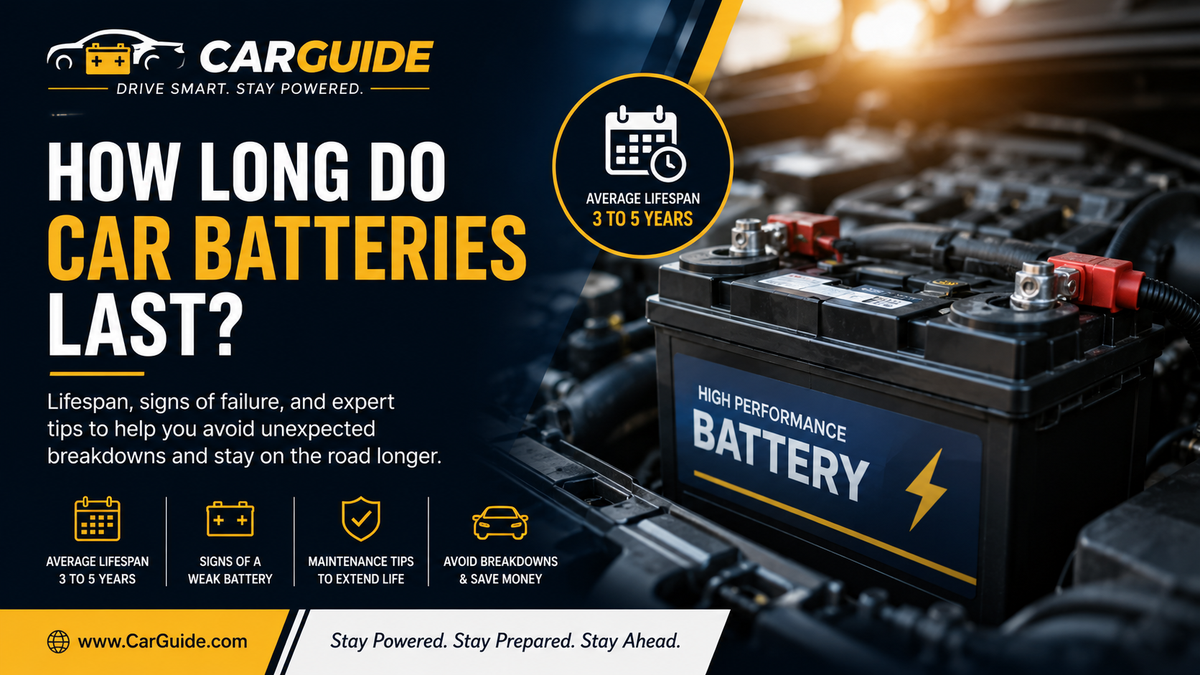
How Long Do Car Batteries Last? Average Lifespan, Signs, and Maintenance Tips
A car battery is one of the most important components of any vehicle. Without it, your vehicle simply cannot start or operate many of its electrical systems. Despite its importance, many drivers rarely think about their car battery until something goes wrong. One of the most common questions vehicle owners ask is, “How long do car batteries last?”
The answer is not always straightforward because battery lifespan depends on several factors, including driving habits, climate conditions, maintenance practices, and the type of battery installed in the vehicle. While most car batteries last several years, some may fail earlier due to extreme temperatures, poor maintenance, or frequent short trips.
Understanding how long car batteries typically last and learning how to maximize battery life can save you money, prevent unexpected breakdowns, and improve vehicle reliability.
What Is a Car Battery?
A car battery is a rechargeable energy storage device that provides electrical power to a vehicle.
Its primary responsibilities include:
- Starting the engine
- Powering the ignition system
- Operating lights
- Supporting electrical accessories
- Supplying energy to onboard electronics
- Stabilizing electrical voltage
Modern vehicles contain numerous electrical components, making the battery an essential part of daily operation.
Without a functioning battery, your vehicle may fail to start or experience electrical issues.
How Long Do Car Batteries Last on Average?
Most conventional car batteries last between three and five years.
However, battery lifespan can vary significantly depending on:
- Climate conditions
- Driving habits
- Battery quality
- Vehicle type
- Maintenance practices
- Electrical demands
Some premium batteries may last more than five years, while poorly maintained batteries can fail in less than three years.
As a general guideline:
Three Years
After three years, batteries should be inspected regularly.
Performance may begin to decline due to:
- Internal wear
- Reduced charge capacity
- Chemical aging
Four to Five Years
Many batteries reach the end of their service life during this period.
Drivers should monitor:
- Starting performance
- Electrical system behavior
- Warning signs of battery deterioration
More Than Five Years
Batteries that exceed five years may still function properly but become increasingly susceptible to sudden failure.
Preventive replacement often reduces the risk of unexpected breakdowns.
How Does a Car Battery Work?
Understanding battery operation helps explain why batteries eventually wear out.
A standard car battery stores chemical energy and converts it into electrical energy.
The battery contains:
- Positive plates
- Negative plates
- Electrolyte solution
- Separators
- Battery terminals
When you start the vehicle:
- The battery supplies electrical current to the starter motor.
- The starter motor turns the engine.
- The engine starts running.
- The alternator recharges the battery.
Over time, the chemical reactions inside the battery gradually reduce its ability to hold and deliver electrical energy efficiently.
Factors That Affect Car Battery Lifespan
Several factors determine how long a car battery lasts.
Climate Conditions
Temperature is one of the most significant influences on battery life.
Hot Weather
Extreme heat accelerates chemical reactions inside batteries.
High temperatures can:
- Cause fluid evaporation
- Damage internal components
- Increase corrosion
- Shorten lifespan
Hot climates often reduce battery life significantly.
Cold Weather
Cold temperatures slow chemical reactions.
Winter conditions can:
- Reduce battery capacity
- Increase engine starting requirements
- Make older batteries fail unexpectedly
Although heat causes long-term damage, cold weather often exposes existing battery weaknesses.
Driving Habits
Driving behavior directly affects battery health.
Frequent Short Trips
Short drives may not provide sufficient time for the alternator to recharge the battery fully.
Repeated short trips can lead to:
- Incomplete charging cycles
- Sulfation buildup
- Reduced battery capacity
Long Drives
Longer journeys generally benefit batteries because they allow:
- Full charging cycles
- Stable operating temperatures
- Better electrical efficiency
Regular highway driving often promotes healthier battery performance.
Vehicle Electrical Demands
Modern vehicles contain numerous electronic systems.
Examples include:
- Navigation systems
- Heated seats
- Power windows
- Entertainment systems
- Driver-assistance technologies
- Wireless charging systems
Increased electrical demand places additional stress on batteries.
Vehicles with extensive electronic features may experience faster battery wear.
Battery Quality
Not all batteries are created equally.
Battery quality significantly affects longevity.
Premium batteries often offer:
- Better construction
- Superior materials
- Increased durability
- Improved performance
Cheaper batteries may have shorter service lives and lower reliability.
Vehicle Storage
Vehicles that remain unused for long periods often experience battery problems.
During inactivity:
- Batteries slowly discharge
- Electrical systems continue drawing power
- Sulfation may occur
Vehicles stored for extended periods may require battery maintenance or charging systems.
Corrosion and Maintenance
Battery terminals can accumulate corrosion over time.
Corrosion may:
- Restrict electrical flow
- Increase resistance
- Reduce charging efficiency
- Cause starting problems
Regular maintenance helps maximize battery lifespan.
Types of Car Batteries and Their Lifespan
Different battery technologies offer varying life expectancies.
Lead-Acid Batteries
Lead-acid batteries remain the most common type.
Typical lifespan:
Three to five years.
Advantages include:
- Affordable pricing
- Wide availability
- Proven reliability
Absorbent Glass Mat Batteries
AGM batteries offer improved performance.
Typical lifespan:
Four to seven years.
Benefits include:
- Better vibration resistance
- Faster charging
- Enhanced durability
- Improved performance in demanding conditions
Enhanced Flooded Batteries
Enhanced flooded batteries are commonly used in vehicles with start-stop systems.
Typical lifespan:
Four to six years.
Benefits include:
- Better cycling performance
- Increased efficiency
- Improved durability
Lithium-Ion Batteries
Lithium-ion batteries are primarily used in hybrid and electric vehicles.
Typical lifespan:
Eight to fifteen years.
Benefits include:
- Long service life
- High efficiency
- Lightweight construction
Signs Your Car Battery Is Dying
Recognizing early warning signs can help prevent unexpected failures.
Slow Engine Cranking
A slow-starting engine often indicates reduced battery performance.
You may notice:
- Delayed starting
- Weak starter sounds
- Multiple attempts required
Slow cranking is one of the earliest indicators of battery deterioration.
Dim Headlights
A weak battery may struggle to provide sufficient power.
Signs include:
- Dim headlights
- Flickering lights
- Reduced brightness
Electrical issues often accompany battery problems.
Dashboard Warning Light
Many vehicles feature battery warning indicators.
The warning light may indicate:
- Battery issues
- Charging problems
- Alternator failure
Ignoring dashboard warnings can result in unexpected breakdowns.
Electrical Problems
Modern vehicles rely heavily on electrical systems.
Battery issues may cause:
- Malfunctioning infotainment systems
- Power window problems
- Dashboard errors
- Inconsistent electronic behavior
Electrical irregularities often indicate declining battery performance.
Swollen Battery Case
Excessive heat can damage batteries.
Signs include:
- Bulging sides
- Distorted casing
- Physical expansion
A swollen battery should be replaced immediately.
Corroded Battery Terminals
Corrosion appears as:
- White deposits
- Green residue
- Powdery substances
Corrosion interferes with electrical connections and charging efficiency.
What Causes Car Batteries to Fail?
Several factors contribute to battery failure.
Age
Chemical components naturally deteriorate over time.
Aging batteries gradually lose:
- Charge capacity
- Starting power
- Reliability
Age remains the most common cause of battery failure.
Extreme Temperatures
Both heat and cold can accelerate battery degradation.
Environmental stress affects:
- Internal chemistry
- Charging efficiency
- Structural integrity
Excessive Power Drain
Leaving electrical components on can drain batteries.
Examples include:
- Interior lights
- Headlights
- Charging accessories
- Infotainment systems
Repeated discharge cycles shorten battery life.
Faulty Alternator
The alternator charges the battery while the engine runs.
A defective alternator may:
- Undercharge batteries
- Overcharge batteries
- Cause premature failure
Charging system problems often damage batteries.
How to Extend Car Battery Life
Fortunately, several strategies can maximize battery longevity.
Drive Regularly
Regular driving allows batteries to recharge properly.
Longer drives help:
- Maintain charge levels
- Prevent sulfation
- Improve battery health
Consistent use benefits battery performance.
Avoid Frequent Short Trips
Short journeys often prevent full charging.
Combining errands into longer drives can improve charging efficiency.
Turn Off Electronics
Before leaving your vehicle:
- Turn off lights
- Disconnect accessories
- Remove chargers
Reducing unnecessary power consumption helps preserve battery health.
Keep Terminals Clean
Inspect terminals regularly.
Cleaning corrosion improves:
- Electrical conductivity
- Charging performance
- Reliability
Routine maintenance can extend service life.
Secure the Battery
Vibration can damage internal battery components.
Ensure the battery:
- Is firmly mounted
- Remains stable during driving
- Avoids excessive movement
Proper installation improves durability.
Test the Battery Periodically
Battery testing identifies problems before complete failure occurs.
Testing helps determine:
- Voltage levels
- Starting capacity
- Overall health
Preventive testing reduces unexpected breakdowns.
How to Check Car Battery Health
Several methods can evaluate battery condition.
Voltage Testing
Healthy batteries generally maintain proper voltage levels.
Voltage testing provides insights into:
- Charge status
- Overall health
- Potential problems
Professional Battery Testing
Repair facilities often use specialized equipment.
Professional testing measures:
- Cold cranking performance
- Internal resistance
- Remaining lifespan
Professional evaluations provide accurate assessments.
How Much Does a New Car Battery Cost?
Replacement costs vary depending on:
- Battery type
- Vehicle model
- Battery size
- Brand
Standard batteries generally cost less than advanced technologies.
Factors influencing pricing include:
- Warranty coverage
- Performance ratings
- Construction quality
- Technology features
Installation costs may also apply.
When Should You Replace Your Car Battery?
Battery replacement depends on age and performance.
Consider replacement if:
- The battery is older than three years
- Starting becomes difficult
- Electrical problems occur
- The battery repeatedly loses charge
- Testing indicates poor health
Replacing batteries proactively often prevents emergency situations.
Can You Drive With a Weak Battery?
A weak battery may still start your vehicle temporarily.
However, continued operation increases risks.
Potential consequences include:
- Unexpected breakdowns
- Failure to restart
- Electrical malfunctions
- Increased stress on charging systems
Prompt replacement is usually the safest approach.
Seasonal Battery Maintenance Tips
Summer Maintenance
Hot weather can accelerate deterioration.
Recommendations include:
- Inspecting terminals
- Testing voltage
- Monitoring fluid levels
- Parking in shaded areas
Winter Maintenance
Cold temperatures increase starting demands.
Helpful practices include:
- Battery testing before winter
- Cleaning connections
- Ensuring full charge levels
- Limiting unnecessary electrical use
Seasonal maintenance improves reliability.
Frequently Asked Questions
Can a Car Battery Last Ten Years?
Although possible, it is uncommon.
Most batteries require replacement much sooner due to:
- Chemical aging
- Environmental conditions
- Daily usage
Do New Cars Need Battery Maintenance?
Yes.
Even new batteries benefit from:
- Regular inspections
- Clean terminals
- Proper charging habits
Maintenance extends service life.
Does Idling Charge the Battery?
Idling may provide some charging, but extended driving generally delivers better results.
Longer drives usually recharge batteries more effectively.
Can a Dead Battery Be Recharged?
Sometimes.
However, severely deteriorated batteries may not recover sufficient capacity and often require replacement.
Conclusion
So, how long do car batteries last? In most situations, car batteries last between three and five years. However, actual lifespan depends on numerous factors, including climate conditions, driving habits, vehicle electrical demands, battery quality, and maintenance practices.
Understanding the signs of battery deterioration and practicing preventive maintenance can significantly improve reliability and extend battery life. Regular inspections, proper charging habits, and timely replacement help prevent unexpected breakdowns and ensure your vehicle remains dependable.
Because the battery powers essential systems and plays a critical role in starting your vehicle, taking care of it should be an important part of routine car maintenance. By understanding how batteries work and what affects their longevity, drivers can maximize performance, reduce costs, and enjoy greater peace of mind on the road.