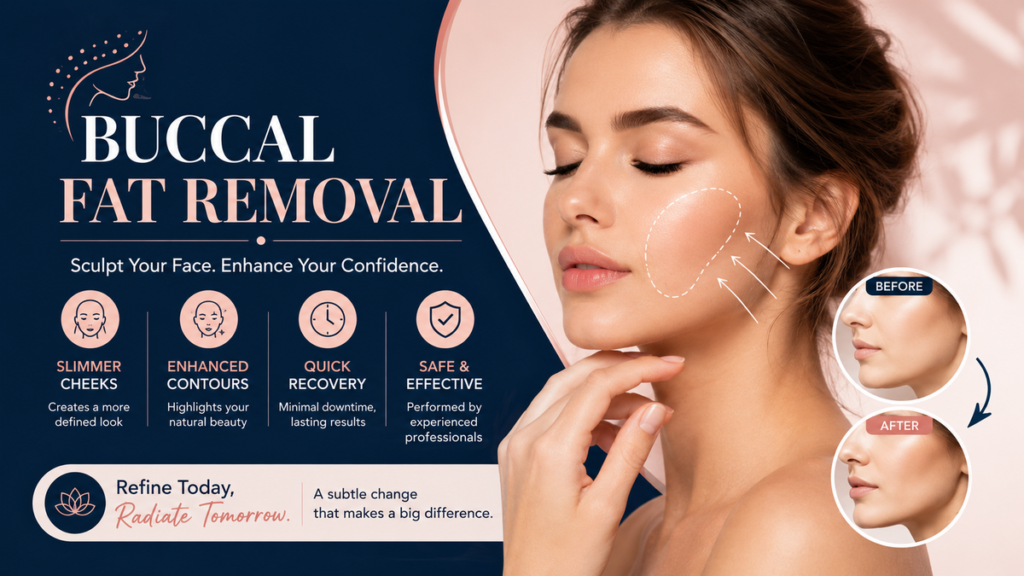
Buccal Fat Removal: Benefits, Procedure, Recovery, Risks & Cost Guide
Buccal fat removal has become one of the most talked-about cosmetic facial procedures in recent years. As facial contouring trends continue to evolve, many people are seeking a slimmer, more sculpted appearance with well-defined cheekbones and a sharper jawline. Buccal fat removal offers a surgical solution for individuals who naturally have fuller cheeks caused by prominent buccal fat pads.
Unlike temporary contouring techniques achieved through makeup or facial exercises, buccal fat removal permanently reduces the volume of fat located deep within the lower cheeks. The procedure is relatively quick, minimally invasive, and leaves no visible external scars because the incision is made inside the mouth. However, like any cosmetic surgery, it requires careful consideration, realistic expectations, and consultation with a qualified plastic surgeon.
This comprehensive guide explains everything you need to know about buccal fat removal, including how the procedure works, who is an ideal candidate, the benefits, risks, recovery timeline, expected results, costs, and important factors to consider before making a decision.
What Is Buccal Fat Removal?
Buccal fat removal, also known as buccal lipectomy or cheek reduction surgery, is a cosmetic surgical procedure that removes part of the buccal fat pads located deep within the cheeks. These naturally occurring fat pads contribute to the fullness of the mid and lower face.
Every person has buccal fat pads, but their size varies significantly from one individual to another. Some people naturally have larger fat pads that create a round or “baby face” appearance regardless of their body weight.
The primary goal of buccal fat removal is to enhance facial definition by reducing cheek volume and emphasizing the natural contours of the cheekbones and jawline.
Understanding Buccal Fat Pads
What Are Buccal Fat Pads?
Buccal fat pads are specialized pockets of fat positioned between facial muscles beneath the cheekbones. They serve functional purposes during infancy by assisting with sucking and facial movement, but their importance decreases as people age.
Unlike body fat that changes dramatically with weight fluctuations, buccal fat tends to remain relatively stable. This is why some individuals continue to have full cheeks despite maintaining a healthy weight.
Why Do Some People Have Fuller Cheeks?
Several factors influence cheek fullness, including:
- Genetics
- Facial bone structure
- Age
- Natural fat distribution
- Ethnicity
- Skin elasticity
For many people, genetics play the biggest role in determining the size of their buccal fat pads.
Why People Choose Buccal Fat Removal
Many individuals pursue buccal fat removal because they desire:
- More defined cheekbones
- A slimmer facial appearance
- Better facial proportions
- Enhanced jawline definition
- Reduced facial roundness
- Improved confidence
It is important to understand that the procedure enhances facial contours rather than dramatically changing one’s identity or facial structure.
Who Is an Ideal Candidate?
Not everyone is a good candidate for buccal fat removal.
The best candidates generally include healthy adults who:
- Have naturally full or round cheeks
- Maintain a stable body weight
- Have realistic expectations
- Do not smoke or are willing to stop before surgery
- Have good overall health
- Want permanent facial contouring
People with naturally thin faces may not be ideal candidates because excessive fat removal can create a hollow appearance as aging naturally reduces facial volume.
Who Should Avoid Buccal Fat Removal?
Certain individuals may benefit from avoiding the procedure.
These include people who:
- Already have narrow facial structures
- Have significant skin laxity
- Are experiencing age-related facial volume loss
- Have certain medical conditions affecting healing
- Expect unrealistic or dramatic transformations
A comprehensive consultation helps determine whether the procedure is appropriate.
How Buccal Fat Removal Works
The surgery is usually performed as an outpatient procedure under local anesthesia with sedation or general anesthesia.
The surgeon carefully removes a controlled amount of fat while preserving surrounding tissues.
The goal is subtle facial refinement rather than excessive volume reduction.
Step-by-Step Procedure
Consultation
Before surgery, the surgeon evaluates:
- Facial anatomy
- Skin quality
- Bone structure
- Medical history
- Desired aesthetic outcome
Photographs are often taken for treatment planning.
Anesthesia
Depending on the patient’s needs, local anesthesia with sedation or general anesthesia may be used.
Internal Incision
A small incision is created inside the mouth near the upper molars.
Because the incision remains inside the mouth, there are no visible facial scars.
Fat Removal
The surgeon gently exposes the buccal fat pad and removes an appropriate amount of fat from each side.
Symmetry is carefully maintained throughout the procedure.
Closing the Incision
Dissolvable sutures are typically used to close the incision.
The surgery usually takes between 30 and 60 minutes.
Recovery Timeline
Recovery varies from person to person but generally follows a predictable pattern.
First Week
Patients commonly experience:
- Swelling
- Mild discomfort
- Bruising
- Tightness
- Temporary difficulty chewing
Cold compresses and prescribed medications help manage symptoms.
Weeks Two to Three
Swelling gradually improves.
Many patients return to work within several days depending on their comfort level.
Normal activities slowly resume.
One to Three Months
Facial swelling continues to decrease.
Cheek definition becomes more noticeable.
Three to Six Months
Final results become increasingly visible as tissues fully heal.
Recovery Tips
Following post-operative instructions improves healing.
Helpful recommendations include:
- Sleep with the head elevated.
- Eat soft foods initially.
- Maintain excellent oral hygiene.
- Avoid smoking.
- Stay hydrated.
- Limit strenuous exercise.
- Attend follow-up appointments.
- Avoid touching the surgical area unnecessarily.
Proper aftercare significantly reduces complications.
Benefits of Buccal Fat Removal
Many patients choose this procedure because it offers several long-term advantages.
Enhanced Facial Contours
The cheeks become more sculpted, creating improved facial definition.
Permanent Results
Once removed, buccal fat does not regenerate.
Although overall body fat may change, the removed fat pads do not return.
No Visible Scars
Since the incision is inside the mouth, external scarring is avoided.
Short Procedure Time
The surgery is relatively quick compared with many cosmetic procedures.
Improved Confidence
Many individuals report increased self-confidence after achieving a more defined facial appearance.
Risks and Potential Complications
Like any surgical procedure, buccal fat removal carries risks.
Possible complications include:
- Infection
- Bleeding
- Swelling
- Numbness
- Facial asymmetry
- Injury to nearby nerves
- Salivary duct injury
- Poor wound healing
- Unsatisfactory cosmetic outcome
Choosing an experienced, board-certified plastic surgeon helps minimize these risks.
How Painful Is Buccal Fat Removal?
Most patients describe discomfort as mild to moderate.
Pain is generally managed with prescribed medication.
The inside of the mouth typically heals quickly because of its rich blood supply.
Diet After Surgery
Nutrition plays an important role during recovery.
First Few Days
Recommended foods include:
- Smoothies
- Yogurt
- Soup
- Applesauce
- Mashed potatoes
- Protein shakes
Gradual Transition
Patients slowly return to normal foods as healing progresses.
Crunchy, spicy, or extremely hot foods should be avoided initially.
When Will Results Be Visible?
Immediate results are not expected because swelling temporarily masks facial definition.
Typical progression:
- Initial swelling: first week
- Visible improvement: one month
- Significant contour changes: three months
- Final results: three to six months
Patience is essential during recovery.
Is Buccal Fat Removal Permanent?
Yes.
The removed buccal fat does not grow back.
However, overall facial appearance may continue to change naturally due to aging, weight fluctuations, and lifestyle factors.
Buccal Fat Removal vs Weight Loss
Many people wonder whether losing weight can achieve similar results.
Weight loss reduces overall body fat but does not specifically eliminate buccal fat pads.
Some individuals maintain full cheeks even at low body fat percentages because of genetics.
Buccal fat removal specifically targets this localized facial fat.
Buccal Fat Removal vs Facial Liposuction
Although both procedures involve fat reduction, they treat different areas.
Buccal fat removal targets deep facial fat inside the cheeks.
Facial liposuction removes superficial fat beneath the skin, commonly around the neck or jawline.
Some patients combine both procedures for comprehensive facial contouring.
Combining Buccal Fat Removal With Other Procedures
Many surgeons perform buccal fat removal alongside complementary cosmetic procedures.
Common combinations include:
Chin Augmentation
Improves lower facial balance.
Neck Liposuction
Enhances jawline definition.
Rhinoplasty
Creates greater overall facial harmony.
Facelift
Addresses aging while improving facial contours.
Chin Liposuction
Further refines the jawline.
Combining procedures may reduce overall recovery time compared to separate surgeries.
Choosing the Right Surgeon
Selecting the right surgeon is one of the most important decisions.
Consider:
- Board certification
- Experience with facial surgery
- Before-and-after photos
- Patient reviews
- Hospital privileges
- Communication style
Never choose a surgeon based solely on price.
Questions to Ask During Consultation
Before surgery, ask:
- Am I a good candidate?
- How many procedures have you performed?
- What results can I realistically expect?
- What are the possible risks?
- What is the recovery timeline?
- How should I prepare?
- What happens if complications occur?
An informed patient makes better decisions.
Cost of Buccal Fat Removal
The cost varies depending on:
- Geographic location
- Surgeon experience
- Facility fees
- Anesthesia
- Additional procedures
Because buccal fat removal is cosmetic, insurance generally does not cover the expense.
Patients should request a detailed cost estimate during consultation.
Myths About Buccal Fat Removal
Myth 1: Everyone Looks Better After Surgery
Not true.
The procedure is most suitable for carefully selected candidates.
Myth 2: Recovery Takes Months
Most patients resume normal routines within a relatively short period.
Myth 3: Results Are Immediate
Swelling delays visible results.
Final improvements appear gradually.
Myth 4: The Surgery Is Extremely Painful
Most patients experience manageable discomfort rather than severe pain.
Myth 5: The Procedure Is Right for Everyone
Every face is unique.
Some individuals achieve better results through non-surgical treatments or no treatment at all.
Long-Term Results
Long-term satisfaction depends on:
- Appropriate patient selection
- Skilled surgical technique
- Realistic expectations
- Healthy lifestyle
- Stable body weight
As natural aging occurs, facial volume decreases over time, so excessive fat removal should be avoided to maintain balanced facial aesthetics.
Preparing for Surgery
Preparation may include:
- Medical evaluation
- Medication review
- Avoiding blood-thinning supplements
- Quitting smoking
- Arranging transportation
- Preparing soft foods
- Planning adequate recovery time
Following your surgeon’s instructions carefully promotes safer surgery and smoother healing.
Emotional Considerations
Cosmetic surgery should be a personal decision rather than one influenced by social media trends or outside pressure.
Patients should pursue the procedure because it aligns with their own aesthetic goals and expectations.
Having realistic expectations contributes significantly to long-term satisfaction.
Conclusion
Buccal fat removal is a specialized cosmetic procedure designed to permanently reduce fullness in the lower cheeks and create a more sculpted facial appearance. For carefully selected candidates with naturally prominent buccal fat pads, the surgery can enhance facial definition, highlight cheekbones, and improve overall facial balance while leaving no visible external scars.
Although the procedure is relatively straightforward, it should never be viewed as a one-size-fits-all solution. Facial anatomy, age, genetics, skin quality, and long-term aging all influence whether buccal fat removal is the right choice. Consulting with an experienced, board-certified plastic surgeon is essential for determining candidacy and developing a personalized treatment plan.